

Tory Burch Tops: Blouses, Knits and Tees Compared
Shopping the top half of the wardrobe here means choosing between three genuinely different products that sit under one navigation label. Woven shirting, knitwear and jersey use different fibres, occupy different price bands, cover different seasons and demand different care. The buyer who collapses all three into one category pays knitwear money for something meant to be laundered like a tee, or takes a $150 tank home when the layering problem needed a $495 sweater. Price, fabric, logo intensity, care, layering and resale behaviour are the columns this comparison uses to set the three side by side. Every figure below is an observed market price read off the brand’s own United States site in September 2026, not an official price list, and the company publishes none. The aim is to make the trade-offs legible before you commit.
The three families underneath the one label
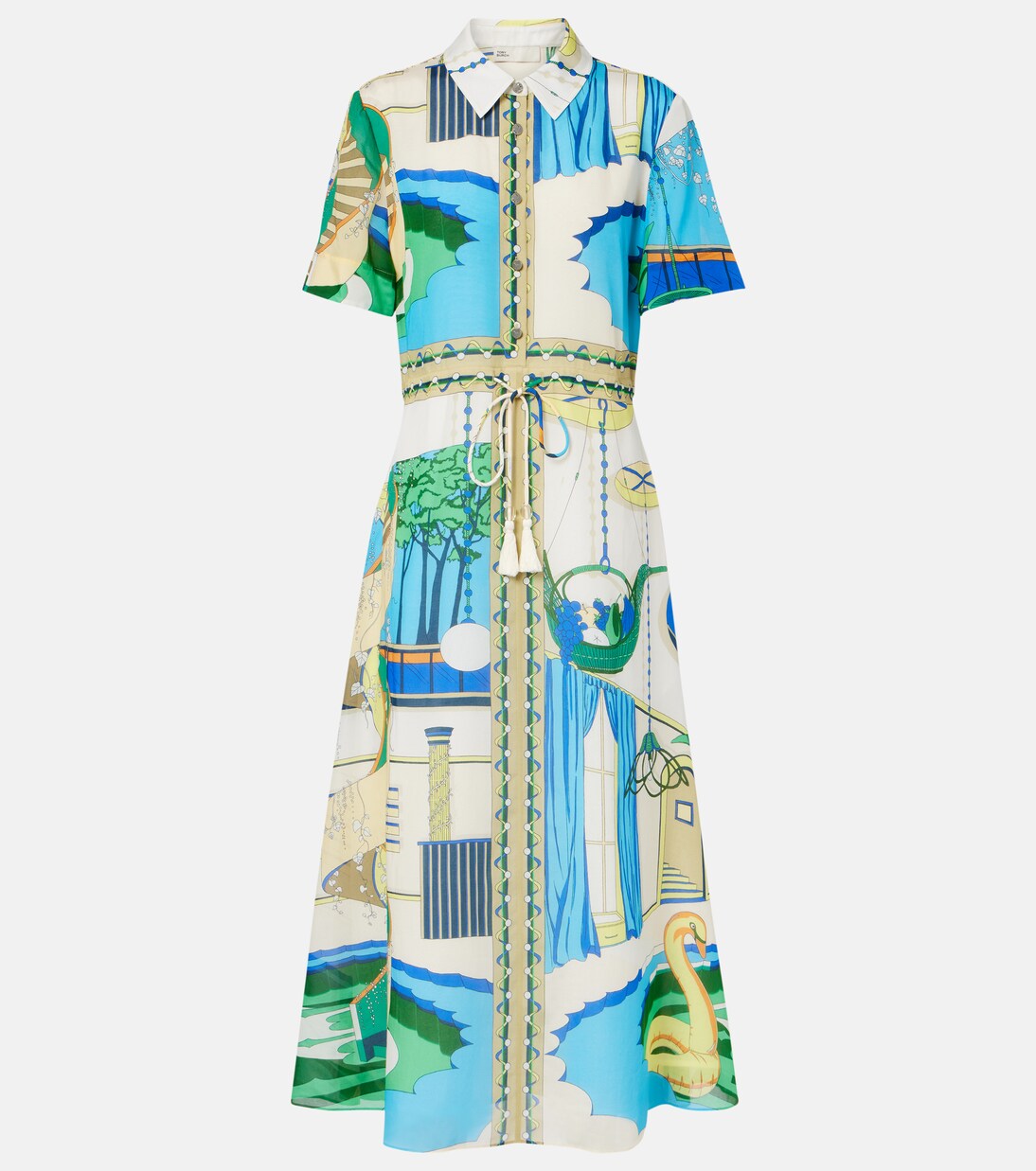
The first group is woven shirting: button-downs and blouses cut from cotton, linen and viscose. Second is knitwear, the widest and most expensive group, running from fine merino through wool and cashmere to coated jacquard cardigans. Third is jersey: tanks, tees and the softer sleeveless shapes that anchor the bottom of tory burch outlets the range. A single house language, usually summarised as elevated American sportswear with a slightly off-kilter femininity, covers all three, so prints and colour logic carry across even where nothing structural does. There is no separate label and no diffusion line here: the runway collection and the main collection are the same brand, not two tiers. When people discuss tory burch tops as though a designer version and a commercial version existed, they are describing something this company does not operate.
Woven shirting: the substance and the price
Shirting has become a louder part of the collection rather than a quiet basics filler. Crisp button-downs were reported as a theme of the Spring 2026 collection shown in September 2025, presented alongside piped blazers the founder publicly connected to her father. Cotton, linen and viscose are the fabrics observed across current woven pieces, printed in some cases and in others plain and cut for tucking. One practical thing marks off woven tops from the other two families: they hold a collar and a cuff, so they carry a jacket and read as dressed even over casual trousers. Set against knitwear, they are cooler in summer and far less forgiving of a poor fit through the shoulder, since no stretch absorbs the difference. They cost more than jersey, crease more than jersey and photograph better than jersey, which is the trade in a single line.
Merino, cashmere and jacquard: reading the knitwear
Knitwear is where the money and the design attention concentrate. The observed 2026 figures covered a merino wool turtleneck at $420, a wool double collar V-neck sweater at $495 and a T Monogram jacquard cardigan at $550, roughly two to three times the jersey band. Because current product names run through merino wool, cashmere, plain wool and coated or jacquard constructions, the fibre content is generally legible from the name alone. This is also the family that gets runway work first: hand-beaded bird embroideries were reported on wool and cashmere cardigans for Spring 2026, said to derive from an antique tapestry chair belonging to the founder’s mother. That explains why a cardigan here can cost more than a coat elsewhere in the market. Knitwear is the slowest of the three to date, because a plain merino turtleneck belongs to no particular season.
Jersey, meaning tanks, tees and the cheapest way in
Jersey is the accessible end and the group most people buy first. Both a cotton scoop tank and a ribbed tank were observed at $150, while a racerback tank sat at $330, a wide spread for what looks superficially like one product type. Construction and yarn account for most of that gap rather than branding, and the cheaper pieces behave like ordinary wardrobe basics. Jersey wins on washability, on packing volume and on disappearing neatly under a blazer or a cardigan. It forfeits structure, because a fine tank shows every seam of whatever is worn over it and holds no shape on its own. The worst loss comes second-hand, where plain jersey is the least liquid clothing this brand makes.
Observed 2026 prices, one family against another
Laying the observed figures next to each other shows how uneven the three families are. At the bottom is a narrow jersey band; through the middle and upper middle runs a wide knitwear band; woven shirting overlaps both, depending on fibre and finish. For context, the wider clothing range reached $995 for a double breasted wool coat, so even the dearest sweater is not the ceiling. Every number in the table comes from a single September 2026 pass on one market, and none of it is a published price list. Regional storefronts price differently, while a promotional period moves the whole set at once. Treat the table as a guide to which family your budget reaches rather than a forecast of what you will be charged.
| Family | Price range as observed | Typical fibres | Strongest at | Where it loses |
|---|---|---|---|---|
| Jersey tanks and tees | $150 to $330 | Cotton, ribbed cotton jersey | Layering, washing and packing | Structure plus resale |
| Woven shirting | A mid band that overlaps both | Cotton, viscose and linen | Collars, summer plus tailoring | Creasing, shoulder fit |
| Knitwear | $420 to $550 | Merino, wool, cashmere, jacquard | Longevity, warmth, detail | Cost, pilling, care |
Logo intensity, or Double T against T Monogram
Two different marks run through this brand and they are not interchangeable, which is the most useful thing to grasp before buying. The Double T is the 2004 emblem, a serif T beside its mirror image inside a circle, appearing as cast hardware, a laser-cut opening or embossing. The T Monogram is a separate and later thing: an all-over repeating pattern, reported as introduced for Spring 2021, used on coated canvas, jacquard, knitwear and small leather goods. On tops the distinction is highly visible, since a jacquard cardigan carrying the repeat is a statement garment and a plain merino turtleneck is not. Nor is the Double T a monogram of the founder’s initials, which are not two Ts, since it was conceived as a graphic device rather than a signature. Logo intensity is therefore a real decision here, touching resale as much as styling.
How to care for each family, and how long each lasts
Care separates the three families more sharply than price does. In merino, wool or cashmere, knitwear is standard hand-wash-cold or dry-clean territory: dry it flat rather than hung, and store it folded rather than stretched over a hanger. De-pilling with a comb or fabric shaver counts as routine maintenance on fine knits, not a defect signal. The forgiving family is jersey, which tolerates ordinary laundering, while printed and ribbed pieces last longer washed cold and dried away from heat. Woven cotton and linen sit in between, asking for a cool wash and either a press or a deliberate acceptance of creasing. Fussiest of all are coated jacquard and T Monogram pieces, which want spot-cleaning with mild soap and a soft brush instead of a machine.
How each behaves on the second-hand market
What follows describes observed secondary-market behaviour and is not investment advice. Volatile, condition-dependent and platform-dependent is what resale prices are here, because this is accessible luxury and not a value-retaining hard-luxury asset. Bags and shoes shift most reliably for this label in practice, which leaves a top of any kind selling more slowly than a quilted crossbody or a sandal. Across the three families, the most interest gathers around knitwear with a visible pattern or a runway-linked detail, then plain knitwear, then unbranded jersey. The counterfeit problem across the brand depresses buyer trust on unauthenticated platforms, and authenticated consignment consistently clears higher. None of that makes a sweater an asset, and it should not be why you buy one.
Which one to buy first
Knitwear is the buy if you want the brand’s point of view in one garment, because the design attention lands there and seasonal ideas surface there first. If you want the most wearing days per dollar, buy jersey, accept that it is a basic and let the rest of the outfit carry the interest. Dress for offices, or anywhere a jacket appears, and woven shirting is the piece that changes how the whole wardrobe reads. Settle your logo intensity before you shop rather than at the checkout, since deciding late is how people end up with something they never wear. Three checks: the fibre in the product name, whether the mark is hardware or pattern, and the care implication against your actual laundry habits. Do those three things and the category becomes legible, which is more than most shoppers get from a label that lumps tory burch tops into one list.












Commentaires récents